How Does Synthetic Cannabinoids Work
Substance Use and Addiction Support

Oct
Substance Use and Addiction Support:
Understanding Treatment, Recovery, and Where to Get Help
Substance use can affect almost every part of a person’s life, including physical health, mental health, relationships, work, education, finances, and overall well-being. When substance use becomes difficult to control or continues despite harmful consequences, it may be a sign of a substance use disorder (SUD).
The good news is that substance use and addiction support is available, and recovery is possible. Getting help does not mean someone has failed or lacks willpower. Substance use disorders are treatable health conditions, and effective treatment can include counseling, behavioral therapies, medications, peer support, family involvement, and other recovery services. Substance Use and Addiction Support
The right type of support depends on the individual. Some people benefit from outpatient counseling, while others may need more intensive treatment or medically supervised care. For some substance use disorders, medications can play an important role in reducing cravings, managing withdrawal, and supporting long-term recovery.
This guide explains what substance use and addiction support means, how to recognize when help may be needed, what treatment options are available, how families can provide support, and what someone can do when they are ready to take the first step.
What Is Substance Use and Addiction Support?
Substance use and addiction support refers to the medical, psychological, social, and community-based services available to people experiencing problems related to drugs or alcohol.
Support can happen at many stages.
Someone may seek help because they are concerned about their substance use but have not developed a substance use disorder. Another person may already have a diagnosed disorder and need ongoing treatment and recovery support.
Support can include:
- Substance use screening
- Medical assessment
- Counseling
- Behavioral therapy
- Medication-assisted treatment
- Withdrawal management
- Residential treatment
- Outpatient treatment
- Peer recovery support
- Family counseling
- Support groups
- Recovery housing
- Mental health services
- Relapse prevention
- Overdose prevention
- Help with employment, housing, or other social needs
According to the Substance Abuse and Mental Health Services Administration (SAMHSA), recovery is a process through which people improve their health and wellness, live self-directed lives, and work toward reaching their full potential. Recovery can involve many different pathways rather than one single approach.
What Is a Substance Use Disorder?
A substance use disorder is a health condition involving problematic use of alcohol or drugs that can cause significant impairment or distress.
Substance use disorders can involve different substances, including:
- Alcohol
- Cannabis
- Opioids
- Prescription medications
- Stimulants
- Cocaine
- Tobacco and nicotine
- Sedatives
- Hallucinogens
- Inhalants
- Other drugs
A person does not need to use a substance every day to have a substance use disorder.
The important issue is the relationship between the person and the substance, including whether use has become difficult to control or is causing problems in important areas of life.
The Centers for Disease Control and Prevention describes SUD as a treatable chronic disease characterized by cognitive, behavioral, and physiological symptoms associated with continued substance use despite significant substance-related problems. Substance Use and Addiction Support
Addiction and Substance Use Disorder Are Not Exactly the Same
The terms addiction and substance use disorder are often used interchangeably, but they are not exactly identical.
A substance use disorder can range from mild to severe.
Addiction generally refers to more severe substance use involving compulsive use and difficulty controlling the behavior despite negative consequences.
This distinction matters because someone does not have to “hit rock bottom” before seeking help.
Early support can be valuable.
If a person notices that substance use is becoming difficult to control, affecting relationships, interfering with responsibilities, or creating health problems, seeking professional guidance can be an important step.
SAMHSA emphasizes that people can benefit from treatment and recovery support at different stages of a substance use disorder.
Signs That Someone May Need Addiction Support
Recognizing the signs of problematic substance use can help someone seek support earlier.
Potential warning signs include:
- Using more of a substance than originally intended
- Trying to cut down but being unable to do so
- Spending significant time obtaining, using, or recovering from a substance
- Experiencing strong cravings
- Neglecting work, school, family, or other responsibilities
- Continuing to use despite relationship problems
- Using substances in physically dangerous situations
- Developing tolerance
- Experiencing withdrawal symptoms
- Losing interest in previously enjoyable activities
- Hiding or lying about substance use
- Repeatedly experiencing financial, legal, or health problems related to use
One sign alone does not necessarily mean someone has an addiction.
However, a pattern of these experiences may indicate that it is time to speak with a healthcare professional.
Why Asking for Help Can Be Difficult
Many people who need substance use and addiction support hesitate to ask for help.
They may feel:
- Ashamed
- Embarrassed
- Guilty
- Afraid of being judged
- Worried about losing their job
- Concerned about family reactions
- Uncertain about treatment
- Afraid of withdrawal
- Worried about treatment costs
- Convinced they should be able to stop on their own
Stigma can make these concerns even worse.
Addiction is not simply a matter of poor character or a lack of willpower. The CDC describes addiction as a treatable disease and notes that recovery may involve medications, therapy, and sometimes rehabilitation services.
Asking for help should be viewed as a health decision rather than a personal failure.
Types of Substance Use and Addiction Support
There is no single treatment that works for everyone.
Effective support is generally individualized according to the person’s substance use, health, circumstances, preferences, and recovery goals.
1. Professional Assessment
The first step may be a conversation with a doctor, therapist, addiction specialist, or other qualified healthcare professional.
An assessment may look at:
- Substance use history
- Physical health
- Mental health
- Medications
- Withdrawal symptoms
- Previous treatment
- Family and social circumstances
- Housing and employment
- Safety concerns
- Recovery goals
The purpose is not to judge the person.
It is to determine what type of support may be appropriate.
2. Counseling and Behavioral Therapy
Counseling is a common component of addiction treatment.
A therapist can help someone understand:
- Why they use substances
- What situations trigger use
- How cravings develop
- How to manage stress
- How to cope with difficult emotions
- How to repair relationships
- How to build healthier routines
- How to prevent or respond to relapse
Behavioral therapies can be delivered individually, with families, or in groups.
The specific approach should be matched to the person’s needs.
3. Medications for Substance Use Disorders
For some substance use disorders, medication can be an important part of treatment.
SAMHSA states that medications combined with counseling and behavioral therapies can provide a whole-person approach to treating substance use disorders.
For example, medications are available for certain forms of alcohol and opioid use disorder.
For opioid use disorder, FDA-approved medications include:
- Buprenorphine
- Methadone
- Naltrexone
These medications can help reduce cravings and withdrawal and support continued engagement in treatment.
The CDC notes that medication treatment for opioid use disorder is associated with reduced overdose risk and mortality. Substance Use and Addiction Support
Medication is not appropriate for every person or every substance, so treatment decisions should be made with a qualified healthcare professional.
4. Withdrawal Management
Some substances can cause significant withdrawal when a person suddenly stops using them.
Withdrawal may involve:
- Anxiety
- Irritability
- Sleep problems
- Sweating
- Nausea
- Tremors
- Muscle aches
- Cravings
- Changes in mood
- Other physical symptoms
Withdrawal can sometimes be medically dangerous.
Alcohol and certain sedative medications, for example, can produce potentially serious withdrawal syndromes.
For this reason, people should not assume that abruptly stopping a substance is always safe.
A healthcare professional can determine whether medical supervision is necessary.
5. Residential Treatment
Residential treatment involves living at a treatment facility for a period of time while receiving structured support.
It may be appropriate for people who:
- Need a highly structured environment
- Have significant substance use problems
- Lack a safe recovery environment
- Need intensive therapy
- Have co-occurring health or mental health concerns
Residential programs vary considerably in their services, philosophy, length, and cost.
People considering residential treatment should ask about licensing, credentials, treatment methods, medical services, aftercare, costs, and what happens when the program ends.
6. Outpatient Treatment
Outpatient programs allow people to receive treatment while continuing to live at home.
Services may include:
- Individual counseling
- Group therapy
- Medical appointments
- Medication management
- Recovery education
- Peer support
- Relapse-prevention planning
Outpatient care can be particularly useful for people who have a stable living environment and do not require residential treatment.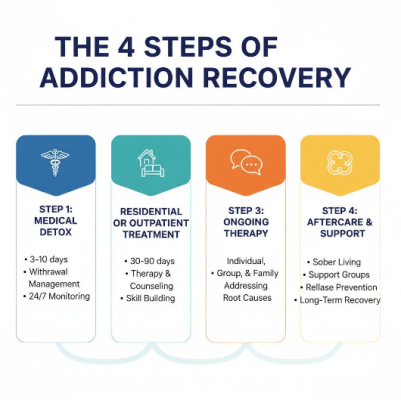
Some outpatient programs are more intensive than others.
7. Peer Recovery Support
Peer support can be an important part of recovery.
A peer supporter may be someone with personal experience of substance use and recovery who has received training to help others.
Peer support can provide:
- Encouragement
- Understanding
- Accountability
- Practical guidance
- Connection
- Hope
SAMHSA describes peer, family, and community support as important components of recovery.
8. Support Groups
Support groups can give people a place to talk with others who have experienced similar challenges.
Depending on location and personal preference, people may find:
- In-person meetings
- Online meetings
- Recovery communities
- Faith-based groups
- Peer-led groups
- Family support groups
Examples of well-known mutual-support organizations include Alcoholics Anonymous, Narcotics Anonymous, and SMART Recovery. Substance Use and Addiction Support
No single support group is right for everyone.
The most important thing is finding a setting where a person feels respected, safe, and encouraged.
Substance Use and Mental Health
Substance use and mental health are closely connected.
Some people use alcohol or drugs to cope with:
- Anxiety
- Depression
- Trauma
- Stress
- Loneliness
- Insomnia
- Other emotional difficulties
Substance use can temporarily change how someone feels, but it may also make underlying problems worse over time.
A person may therefore need support for both substance use and mental health.
This is sometimes described as having co-occurring disorders or dual diagnosis.
Treatment should consider both issues rather than treating them as completely separate problems.
SAMHSA notes that people with substance use disorders are at particular risk of developing other health conditions, making integrated care especially important.
The Role of Family in Addiction Support
Substance use does not affect only the individual.
Family members may experience:
- Stress
- Fear
- Anger
- Confusion
- Financial problems
- Relationship conflict
- Emotional exhaustion
Families can still play a positive role in recovery.
Helpful approaches include:
Listen without immediately judging
Creating a safe environment can make it easier for someone to discuss their substance use honestly.
Encourage professional help
Instead of trying to become the person’s therapist or doctor, family members can encourage them to speak with qualified professionals.
Set healthy boundaries
Support does not mean accepting harmful behavior.
Healthy boundaries can protect both the individual and their family.
Learn about addiction
Understanding substance use disorders can reduce stigma and help family members respond more effectively.
Look after your own health
Family members may also need counseling, peer support, or their own support group.
How to Talk to Someone About Substance Use
Starting the conversation can feel uncomfortable.
A calm, private setting is usually better than confronting someone during an argument or while they are intoxicated.
You might begin by saying:
“I’ve noticed that you’ve been struggling lately, and I’m concerned about you. I care about you and want to help you find support.”
Try to focus on specific observations rather than accusations.
For example:
Instead of:
“You are destroying your life.”
Consider:
“I’ve noticed that you’ve missed work several times and seem to be struggling. Would you be willing to talk with someone about what’s happening?”
The objective is to open a conversation rather than win an argument.
What Does Recovery Look Like?
Recovery does not look exactly the same for everyone.
For some people, recovery means stopping substance use completely.
For others, the path may involve several stages of treatment, medication, counseling, harm-reduction strategies, and ongoing support.
SAMHSA describes recovery as a highly personal process that can involve clinical treatment, medications, faith-based approaches, peer support, family support, self-care, and other approaches. Substance Use and Addiction Support
Recovery can involve four broad areas:
Health
Improving physical and mental well-being.
Home
Having a safe and stable place to live.
Purpose
Developing meaningful activities such as work, education, volunteering, family responsibilities, or hobbies.
Community
Building healthy relationships and social connections.
These areas can reinforce one another.
Relapse Does Not Mean Recovery Has Failed
Recovery can involve setbacks.
A return to substance use does not mean that treatment was pointless or that recovery is impossible. Substance Use and Addiction Support
Instead, it can be an opportunity to examine what happened and adjust the recovery plan.
Possible triggers may include:
- Stress
- Social pressure
- Exposure to substances
- Conflict
- Trauma
- Loneliness
- Mental health symptoms
- Returning to an old environment
- Overconfidence about recovery
A healthcare professional or recovery support person can help identify triggers and develop strategies for responding to them.
SAMHSA emphasizes resilience and recognizes setbacks as part of life and recovery rather than evidence that someone cannot recover.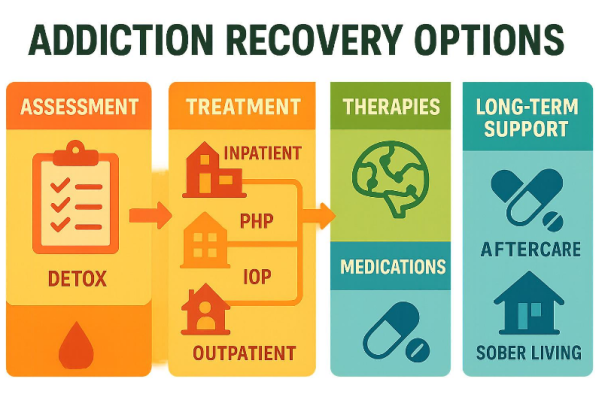
Overdose Prevention and Substance Use Support
For people who use opioids or may encounter illicit drugs, overdose prevention is an important component of substance use support.
Naloxone is a medication that can rapidly reverse an opioid overdose when administered promptly.
People at risk of opioid overdose, their families, and others who may be present during an overdose should learn about naloxone and emergency response where appropriate.
Importantly, overdose prevention does not replace treatment.
It is one part of a broader approach that can help keep people alive while they access care and recovery support.
How to Find the Right Addiction Treatment
Finding treatment can feel overwhelming, especially when someone is already dealing with stress or withdrawal.
Start by identifying the level of support needed.
Ask:
- Is medical supervision necessary?
- Is there a safe place to live?
- Is there a mental health condition that also needs treatment?
- Would outpatient care be enough?
- Is residential treatment appropriate?
- Is medication an option?
- Does the program treat the specific substance involved?
- What are the costs?
- Does the provider accept insurance or offer financial assistance?
- What happens after the initial treatment period?
SAMHSA recommends looking for care that matches a person’s needs and circumstances and provides resources for finding healthcare professionals, programs, and support groups.
In the United States, FindTreatment.gov provides a treatment locator for substance use and mental health services.
People outside the United States should look for their country’s health ministry, public health authority, addiction treatment services, hospitals, or licensed behavioral-health providers.
How to Support Someone Who Is Not Ready for Treatment
Not everyone is ready to seek help immediately.
If someone refuses treatment, you can still:
- Keep communication open
- Express concern without constant criticism
- Provide accurate information
- Encourage a medical checkup
- Offer practical assistance
- Set boundaries around unsafe behavior
- Avoid enabling harmful behavior
- Take care of your own mental health
You cannot force another adult to recover.
You can, however, make it easier for them to seek help when they become ready.
Substance Use and Addiction Support for Young People
Young people may face particular challenges related to substance use.
Parents and caregivers can help by:
- Maintaining open communication
- Asking nonjudgmental questions
- Learning about the substances young people may encounter
- Monitoring changes in behavior
- Paying attention to mental health
- Setting clear expectations
- Seeking professional help when concerns arise
Early intervention can prevent problems from becoming more severe.
If a young person is experiencing substance use alongside depression, anxiety, trauma, self-harm, or suicidal thoughts, professional assessment is particularly important.
Removing the Stigma Around Addiction
Stigma can prevent people from seeking treatment.
Words such as “junkie,” “drunk,” or “addict” can reduce a person to a health condition and may reinforce shame.
A more supportive approach is to use person-first language such as:
- “Person with a substance use disorder”
- “Person experiencing addiction”
- “Person in recovery”
- “Someone who uses drugs or alcohol”
The language we use matters.
People are more than their substance use.
They are parents, children, partners, friends, employees, students, professionals, and members of their communities.
When to Seek Urgent Help
Some situations require immediate medical attention rather than waiting for a routine appointment.
Seek emergency help if someone has:
- Lost consciousness
- Stopped breathing or is having severe difficulty breathing
- Experienced a seizure
- Severe chest pain
- Severe confusion
- Signs of a serious overdose
- Extreme agitation or dangerous behavior
- Severe withdrawal symptoms
- Suicidal thoughts or an immediate risk of self-harm
If someone is unconscious or experiencing a suspected overdose, contact local emergency services immediately.
Do not leave the person alone while waiting for emergency assistance.
Frequently Asked Questions About Substance Use and Addiction Support
What is substance use and addiction support?
Substance use and addiction support includes professional treatment, counseling, medication, peer support, family support, recovery programs, and other services designed to help people reduce harmful substance use and achieve better health and well-being.
Can addiction be treated?
Yes. Substance use disorders are treatable health conditions. Treatment can involve behavioral therapies, medications, peer support, recovery programs, and other services depending on the person’s needs.
Does someone have to stop using drugs before getting help?
No. People can seek professional help at any stage. A healthcare professional can assess their situation and recommend an appropriate approach.
What is the best treatment for addiction?
There is no single treatment that works for everyone. Treatment should be tailored to the substance involved, severity of the disorder, physical health, mental health, living situation, preferences, and recovery goals.
Can medication help with addiction?
Yes. Medications are available for some substance use disorders. For example, medications such as buprenorphine, methadone, and naltrexone are used in the treatment of opioid use disorder. Certain medications are also approved for alcohol use disorder.
Can therapy help with substance use?
Yes. Counseling and behavioral therapies can help people understand triggers, manage cravings, develop coping skills, address mental health issues, and build healthier routines.
What can families do to help someone with addiction?
Families can listen without judgment, encourage professional treatment, establish healthy boundaries, learn about addiction, and seek support for themselves.
Does relapse mean treatment failed?
No. Recovery can involve setbacks. A return to substance use can be a signal that the person’s treatment or recovery plan needs to be reassessed and strengthened.
Final Thoughts on Substance Use and Addiction Support
Seeking substance use and addiction support can be one of the most important steps a person takes toward better health and a more stable future.
Addiction is not simply a question of willpower. Substance use disorders can affect the brain, behavior, relationships, and physical health, but they are treatable conditions. Substance Use and Addiction Support
Support can take many forms.
For one person, it may begin with a conversation with a doctor. For another, it may involve counseling, medication, residential treatment, peer support, or a combination of approaches.
Recovery is also personal.
There is no single path that works for everyone, and a person’s needs can change over time.
What matters most is taking the next appropriate step.
If you are concerned about your own substance use, consider speaking with a qualified healthcare professional or addiction specialist. If you are worried about someone you care about, approach them with compassion, encourage professional support, and remember to protect your own well-being too.


Pingback: What to Do During a Seizure: First Aid & Safety Guide