
How Does Synthetic Cannabinoids Work
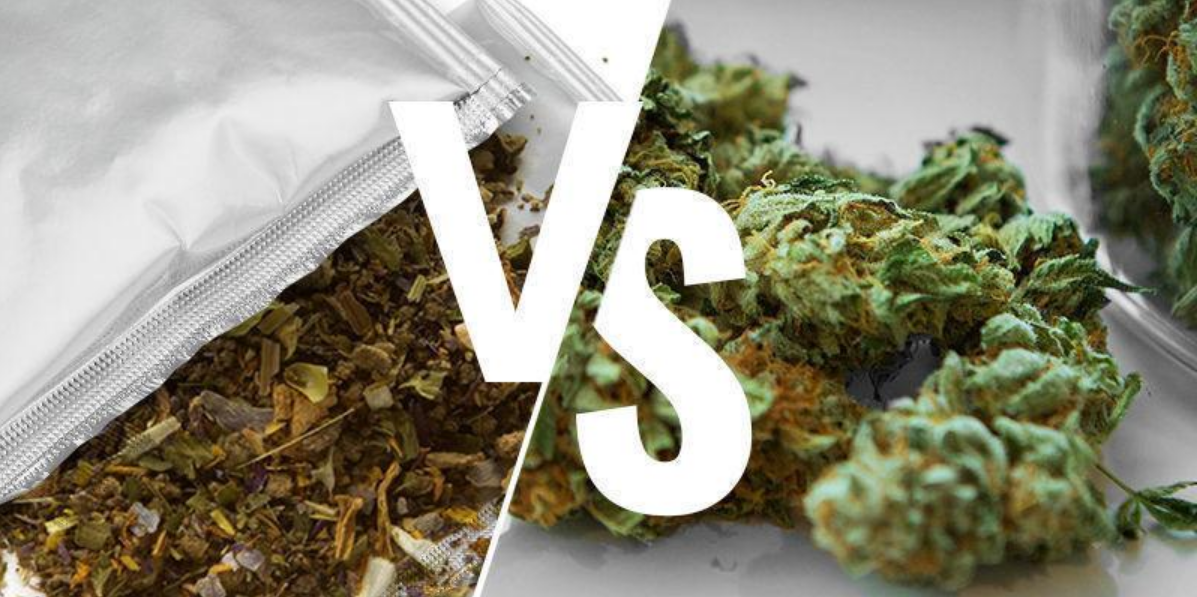
Cannabis vs Synthetic Cannabinoids
Oct
Cannabis vs Synthetic Cannabinoids:
Key Differences, Effects, Risks, and Safety
When comparing cannabis vs synthetic cannabinoids, it is easy to assume they are essentially the same because both can affect the body’s cannabinoid receptors and may produce similar psychoactive effects.
They are not the same.
Cannabis is a plant that naturally produces cannabinoids such as delta-9-tetrahydrocannabinol (THC) and cannabidiol (CBD), along with numerous other compounds. Synthetic cannabinoids, by contrast, are laboratory-made chemicals designed to interact with cannabinoid receptors. Some synthetic cannabinoids can produce effects considerably more powerful and unpredictable than those associated with THC.
The difference matters because products sold as K2, Spice, synthetic marijuana, or “fake weed” have been associated with serious and sometimes life-threatening reactions. The Centers for Disease Control and Prevention (CDC) notes that synthetic cannabinoids can produce unpredictable effects because their chemical contents can vary, while some can affect the brain much more powerfully than marijuana.
At the same time, it is important not to portray cannabis as harmless. Cannabis can also have significant health effects, particularly with frequent use, high-THC products, or use by people who may be especially vulnerable to adverse effects. The CDC identifies risks including cannabis use disorder and other effects involving the brain and body.
So, cannabis vs synthetic cannabinoids is not simply a comparison between two versions of the same drug.
They differ in their chemistry, pharmacology, product consistency, potency, predictability, and documented risks.
This guide explains those differences in detail.
Quick Answer: Cannabis vs Synthetic Cannabinoids
The simplest distinction is this:
Cannabis is a plant containing naturally occurring cannabinoids, including THC and CBD.
Synthetic cannabinoids are man-made chemicals designed to mimic or alter some of the effects of cannabinoids.
Although both can interact with the body’s endocannabinoid system, many synthetic cannabinoids bind to cannabinoid receptors more strongly than THC and can act as full receptor agonists rather than partial agonists. This difference in pharmacology may contribute to their greater potency and increased risk of severe adverse reactions.
Synthetic cannabinoid products can also contain different chemicals from one batch to another. This makes their effects difficult to predict.
Research reviews have linked synthetic cannabinoids to severe effects including agitation, hallucinations, psychosis, seizures, cardiovascular problems, kidney injury, and other medical emergencies.
That does not mean cannabis has no risks. Cannabis can cause intoxication, impaired attention and coordination, dependence, and other health effects. Highly concentrated THC products may also be associated with more severe cannabis use disorder symptoms.
What Is Cannabis?
Cannabis refers to plants in the Cannabis genus that contain a wide range of naturally occurring chemical compounds called cannabinoids.
The best-known cannabinoids are:
- Delta-9-THC
- CBD
- CBG
- CBC
- CBN
- Other minor cannabinoids
Of these, delta-9-THC is primarily responsible for the intoxicating effects associated with cannabis.
CBD is another well-known cannabinoid, but unlike THC, it does not typically produce the same intoxicating “high.”
Cannabis also contains compounds such as terpenes and flavonoids. The precise chemical profile depends on the plant variety, cultivation conditions, processing, and product formulation.
This is one of the major distinctions when discussing cannabis vs synthetic cannabinoids.
Cannabis is not simply one chemical.
It is a complex botanical material containing numerous compounds that can interact with biological systems in different ways.
The exact composition of a cannabis product can also vary considerably. THC concentrations, for example, can differ between products and preparations.
That variation matters because the amount and concentration of THC can influence the intensity and duration of intoxication.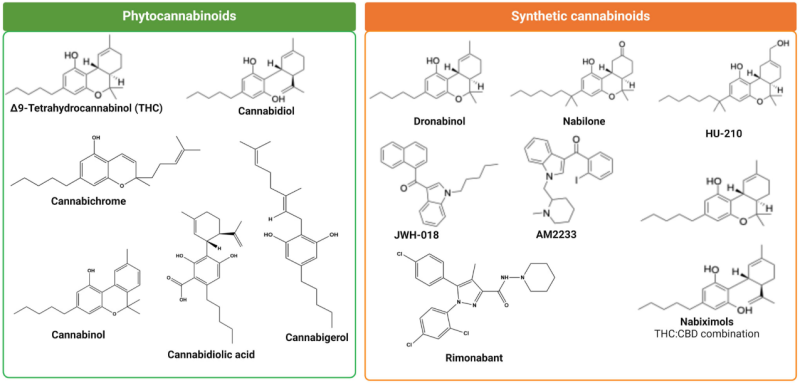
What Are Synthetic Cannabinoids?
Synthetic cannabinoids are laboratory-produced chemicals that interact with cannabinoid receptors or otherwise attempt to reproduce some effects associated with cannabis.
They are sometimes called:
- Synthetic marijuana
- Synthetic cannabis
- K2
- Spice
- Fake weed
- Designer cannabinoids
- Synthetic cannabinoid receptor agonists
However, the term “synthetic marijuana” can be misleading.
Synthetic cannabinoids are not simply laboratory-grown cannabis.
They are chemically different substances.
The CDC specifically states that synthetic cannabinoids are man-made chemicals and are not cannabis or cannabinoid medicines. Products may be sprayed onto dried plant material or sold in liquid form for vaping.
Some synthetic cannabinoid products have historically been marketed using language that made them appear to be harmless herbal products. Research has documented deceptive labeling and marketing practices, including products labeled as “not for human consumption.”
The fact that a product is described as “herbal,” “natural,” or “legal” does not establish that it is safe.
Cannabis vs Synthetic Cannabinoids: The Main Difference
The most important difference is chemistry.
Cannabis naturally produces cannabinoids.
Synthetic cannabinoids are manufactured chemicals.
But chemistry is only the beginning.
The two can also differ substantially in how strongly they interact with cannabinoid receptors.
Cannabis
The main psychoactive compound in cannabis, delta-9-THC, is generally described pharmacologically as a partial agonist of CB1 receptors.
Many synthetic cannabinoids
Many synthetic cannabinoids act as full agonists at cannabinoid receptors and can have greater receptor activity than THC.
Research has found that many synthetic cannabinoids have higher affinity and efficacy at CB1 receptors than THC.
This is important because greater receptor activity can produce much stronger effects.
It can also increase the likelihood of adverse reactions.
Cannabis vs Synthetic Cannabinoids: Comparison Table
| Feature | Cannabis | Synthetic Cannabinoids |
|---|---|---|
| Origin | Plant-derived | Laboratory-made |
| Main psychoactive compound | THC | Varies by product |
| Chemical composition | Naturally occurring cannabinoids and other plant compounds | Often one or more synthetic chemicals |
| CB1 activity | THC is generally a partial agonist | Many are full agonists |
| Potency | Varies, especially with THC concentration | Can be substantially stronger than THC |
| Product consistency | Varies | Can be highly unpredictable |
| Known composition | Often available through regulated testing where legal | May be unknown or mislabeled |
| Effects | Can include euphoria, altered perception, impaired coordination and anxiety | Can include similar effects but also severe agitation, hallucinations, seizures and cardiovascular problems |
| Health risks | Well-documented and potentially significant | Can be severe and unpredictable |
| Dependence potential | Cannabis use disorder can occur | Dependence and withdrawal can occur |
| Long-term evidence | Substantial research exists | Long-term effects remain less well understood for many compounds |
| Common names | Marijuana, cannabis, weed | K2, Spice, synthetic marijuana, fake weed |
The table demonstrates why treating the two substances as interchangeable can be misleading.
How Cannabis Affects the Body
The human body contains an endocannabinoid system, which includes cannabinoid receptors such as CB1 and CB2.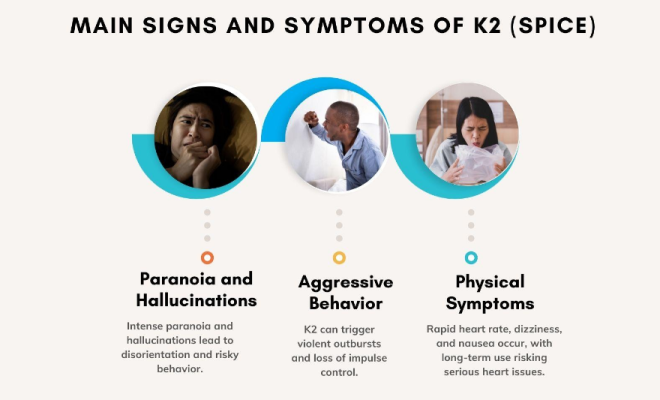
THC interacts with this system and can influence:
- Mood
- Memory
- Attention
- Coordination
- Perception
- Appetite
- Pain perception
- Reaction time
- Heart rate
The experience of cannabis can vary substantially between individuals.
Factors that can influence the effects include:
- THC concentration
- Amount consumed
- Route of administration
- Previous cannabis exposure
- Individual biology
- Other substances or medications
- Frequency of use
- Age
- Mental health vulnerability
This variability is one reason cannabis cannot accurately be described as universally safe or universally dangerous.
Its effects depend heavily on the person, product, dose, and circumstances.
How Synthetic Cannabinoids Affect the Body
Synthetic cannabinoids can activate the same general cannabinoid system, but their effects can be substantially different.
Some synthetic cannabinoids bind very strongly to CB1 receptors and produce intense cannabinoid-like effects.
The result can include:
- Euphoria
- Altered perception
- Relaxation
- Anxiety
- Paranoia
- Confusion
- Agitation
- Hallucinations
- Delusions
- Rapid heartbeat
- High blood pressure
- Nausea
- Vomiting
- Seizures
- Psychosis
The CDC has reported serious reactions involving the neurological, cardiovascular, respiratory, gastrointestinal, and renal systems.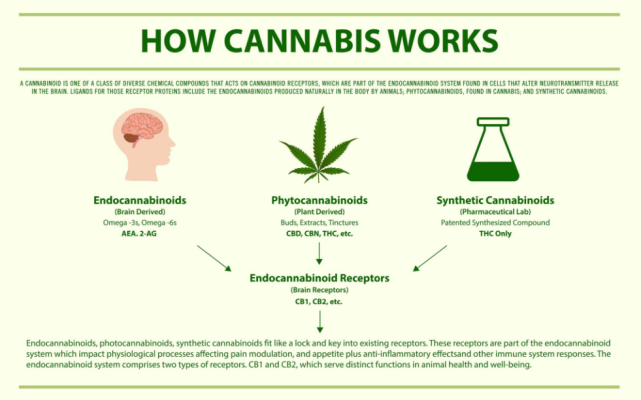
One major problem is that users may not know exactly which chemical they are consuming.
A package labeled with a particular brand or street name does not necessarily tell the consumer the exact chemical composition.
Why Synthetic Cannabinoids Can Be More Dangerous
One of the most important findings in the scientific literature is that many synthetic cannabinoids can behave differently from THC at cannabinoid receptors.
THC is generally a partial agonist.
Many synthetic cannabinoids are full agonists.
A simple analogy can help.
Imagine a receptor as a light switch.
THC may turn the switch on partially.
Some synthetic cannabinoids can activate it much more strongly.
That does not mean every synthetic cannabinoid is automatically more dangerous than every cannabis product. Synthetic cannabinoids represent a very large and chemically diverse group.
However, many compounds have characteristics that make severe intoxication more likely.
Research reviews have concluded that synthetic cannabinoids can have a greater toxicological profile than marijuana and should not be regarded as safe alternatives to cannabis.
Why the Effects of Synthetic Cannabinoids Are So Unpredictable
Another major difference in cannabis vs synthetic cannabinoids is consistency.
When someone purchases a cannabis product from a regulated market, laboratory testing may provide information about its cannabinoid content, depending on the jurisdiction.
Illicit synthetic cannabinoid products may not provide reliable information about what they contain.
Manufacturers may also change formulas.
This creates a difficult situation:
A person might use a product one time and experience one set of effects, then use what appears to be the same product later and experience something entirely different.
Synthetic cannabinoid products can also contain multiple chemicals or contaminants.
The CDC has reported that synthetic cannabinoid products may be contaminated with other drugs or toxic chemicals.
This unpredictability is a central public-health concern.
Cannabis vs Synthetic Cannabinoids and Potency
Potency is another important consideration.
Some synthetic cannabinoids can produce cannabinoid receptor effects considerably stronger than THC.
Research has reported synthetic cannabinoid effects ranging from several times to substantially more potent than THC in certain experimental contexts.
However, potency comparisons should be interpreted carefully.
There is no single “synthetic cannabinoid.”
There are hundreds of compounds in the broader synthetic cannabinoid landscape, and their pharmacological properties can differ.
Likewise, cannabis products can vary dramatically in THC concentration.
Therefore, saying “synthetic cannabinoids are always X times stronger than cannabis” would be an oversimplification.
The more accurate conclusion is:
Many synthetic cannabinoids have pharmacological properties that can make them substantially more potent and unpredictable than THC.
Cannabis Health Risks
Cannabis is sometimes described as harmless because it is a plant.
Being plant-derived does not automatically mean something is risk-free.
Cannabis can produce both short-term and longer-term health effects.
The CDC identifies a range of potential health risks associated with cannabis use, including cannabis use disorder.
Short-Term Cannabis Effects
Short-term effects may include:
- Altered perception
- Impaired memory
- Reduced attention
- Slower reaction time
- Impaired coordination
- Increased heart rate
- Anxiety
- Paranoia
- Drowsiness
The intensity of these effects depends partly on THC exposure.
A high-THC product can produce much stronger intoxication than a lower-THC product.
Cannabis Use Disorder
Another important issue is dependence.
Some people who use cannabis develop cannabis use disorder, characterized by difficulty controlling use despite negative consequences.
Possible warning signs include:
- Using more than intended
- Repeated unsuccessful attempts to reduce use
- Spending significant time obtaining or using cannabis
- Continuing to use despite problems
- Developing tolerance
- Experiencing withdrawal symptoms
The risk is not identical for everyone.
Frequency of use, potency, age of first use, and individual vulnerability can all matter.
Recent research reviewing cannabinoid abuse and dependence found that psychoactive cannabinoids such as delta-9-THC have measurable reinforcing and dependence-related effects, although the risk profile differs substantially from potent synthetic cannabinoid receptor agonists.
Synthetic Cannabinoid Health Risks
The potential health risks of synthetic cannabinoids are particularly concerning.
Reported effects include:
- Severe anxiety
- Panic
- Agitation
- Confusion
- Hallucinations
- Psychosis
- Seizures
- Rapid heart rate
- High blood pressure
- Chest pain
- Heart attack
- Breathing problems
- Kidney injury
- Muscle damage
- Stroke
- Loss of consciousness
- Death
The CDC reports that serious illness and death have occurred following synthetic cannabinoid exposure.
The exact symptoms depend on the specific compound, amount used, route of exposure, and other factors.
This is one of the clearest reasons why synthetic cannabinoids should not be viewed as simply stronger marijuana.
They can produce toxic effects that differ from typical cannabis intoxication.
Cannabis vs Synthetic Cannabinoids and Psychosis
Psychosis is another area where the distinction matters.
Cannabis use, particularly exposure to THC, has been associated with psychotic experiences and an increased risk of psychotic disorders among vulnerable individuals.
Synthetic cannabinoids can also produce psychosis.
Some research suggests that synthetic cannabinoid exposure may produce more severe psychotic reactions than conventional cannabis, potentially because of stronger receptor activation and other pharmacological characteristics.
Symptoms can include:
- Paranoia
- Hallucinations
- Delusions
- Severe confusion
- Disorganized thinking
- Agitation
Someone experiencing severe confusion, hallucinations, seizures, chest pain, difficulty breathing, or loss of consciousness after using a cannabinoid product needs urgent medical evaluation.
Is Synthetic Marijuana the Same as Cannabis?
No.
The term “synthetic marijuana” is misleading because it suggests that synthetic cannabinoids are simply artificial cannabis.
They are not.
Cannabis comes from the Cannabis plant.
Synthetic cannabinoids are chemically manufactured compounds designed to interact with cannabinoid receptors.
The CDC explicitly warns that synthetic cannabinoids are not cannabis and can produce unpredictable, potentially life-threatening effects.
The difference is more than semantic.
Calling K2 or Spice “synthetic marijuana” may cause someone to underestimate the potential danger.
Is K2 the Same as Cannabis?
No.
K2 is a common name associated with synthetic cannabinoid products.
It does not refer to ordinary cannabis.
K2 products can contain synthetic chemicals that activate cannabinoid receptors and may produce cannabis-like effects.
However, those effects can be considerably less predictable.
The CDC has documented symptoms ranging from anxiety and paranoia to seizures, hallucinations, heart problems, and other severe reactions.
Is Spice the Same as Cannabis?
Again, no.
Spice is another name historically used for synthetic cannabinoid products.
The term can refer to products containing different synthetic chemicals.
This means the name alone does not tell you precisely what substance is present.
The composition of illicit synthetic cannabinoid products can change over time, which makes predicting effects particularly difficult.
Why Do People Use Synthetic Cannabinoids?
Understanding the reasons people use these substances is important for public health.
Historically, some synthetic cannabinoid products were marketed as alternatives to cannabis.
Some users have also sought them because they believed they would:
- Produce a marijuana-like effect
- Be easier to obtain
- Avoid detection by certain drug tests
- Be legal
- Be safer
- Be made from “natural” ingredients
However, these assumptions can be dangerously misleading.
Some synthetic cannabinoids were initially promoted as “legal highs,” but changes in laws and regulations have affected their legal status in different countries and jurisdictions.
More importantly, legal status does not equal safety.
A substance can be legal in one jurisdiction and still carry significant health risks.
Cannabis vs Synthetic Cannabinoids and Drug Testing
Drug testing is another reason synthetic cannabinoids have historically attracted attention.
Some synthetic cannabinoids have chemical structures that differ significantly from THC.
As a result, traditional cannabis tests may not detect every synthetic cannabinoid.
Research has noted that structural differences contributed to the appeal of some synthetic cannabinoids among people seeking to avoid conventional cannabinoid screening.
However, this should not be interpreted as a recommendation or strategy for evading drug testing.
The important takeaway is simply that a negative standard cannabis test does not necessarily mean a person has not been exposed to a synthetic cannabinoid.
Specialized laboratory testing may be required to identify particular compounds.
Are Synthetic Cannabinoids Addictive?
Yes, synthetic cannabinoids can lead to problematic use and dependence.
The risk varies between compounds.
Some synthetic cannabinoids have powerful effects on cannabinoid receptors, and repeated use can produce tolerance and withdrawal.
Reported withdrawal symptoms may include:
- Irritability
- Anxiety
- Sleep problems
- Sweating
- Nausea
- Restlessness
- Cravings
- Mood changes
The long-term effects of many newer synthetic cannabinoids remain incompletely understood.
This uncertainty itself is an important health concern.
Can Cannabis Be Addictive?
Yes.
Cannabis can lead to problematic use and cannabis use disorder.
That does not mean everyone who uses cannabis becomes dependent.
However, dependence is a genuine possibility.
Risk can be influenced by factors such as:
- Frequency of use
- THC potency
- Age when use begins
- Personal vulnerability
- Family history
- Co-occurring mental health or substance-use problems
The CDC recognizes cannabis use disorder as an important health concern.
Therefore, a balanced cannabis vs synthetic cannabinoids comparison should not present cannabis as completely harmless.
Instead, the evidence suggests that the two substances have different risk profiles, with synthetic cannabinoids often presenting greater unpredictability and more severe acute toxicity.
Cannabis vs Synthetic Cannabinoids: Which Is More Dangerous?
There is no scientifically responsible way to say that every cannabis product is safer than every possible synthetic cannabinoid in every circumstance.
The category “synthetic cannabinoids” contains many different compounds.
Likewise, cannabis products can differ substantially in potency and formulation.
However, the evidence consistently raises serious concerns about the toxicity of many synthetic cannabinoid products.
Synthetic cannabinoids have been associated with severe cardiovascular, neurological, psychiatric, renal, and other complications.
One major reason is that many synthetic cannabinoids have greater receptor efficacy than THC.
Another is that illicit products may contain unknown compounds or mixtures.
Therefore, synthetic cannabinoids should not be assumed to be a safer alternative to cannabis.
Cannabis vs Synthetic Cannabinoids: Effects on the Brain
Both cannabis and synthetic cannabinoids interact with cannabinoid receptors in the brain.
CB1 receptors are particularly important for psychoactive effects.
THC can affect:
- Memory
- Attention
- Perception
- Coordination
- Mood
- Reward pathways
Synthetic cannabinoids can affect many of the same systems.
However, stronger receptor activation can produce more intense effects.
Research has associated synthetic cannabinoid exposure with severe psychiatric symptoms, including hallucinations, delusions, psychosis, agitation, and suicidal thoughts.
The potential for severe neurological effects is one of the major differences between the two categories.
Cannabis vs Synthetic Cannabinoids: Cardiovascular Effects
Both cannabis and synthetic cannabinoids can affect cardiovascular function.
Cannabis, particularly THC, can temporarily increase heart rate.
Synthetic cannabinoids have been associated with:
- Rapid heartbeat
- High blood pressure
- Chest pain
- Arrhythmias
- Heart attack
- Stroke
CDC materials document cardiovascular emergencies among reported synthetic cannabinoid cases.
Because synthetic products can vary substantially in potency and composition, predicting cardiovascular effects can be difficult.
Anyone experiencing significant chest pain, difficulty breathing, collapse, or other serious symptoms after using a cannabinoid product should seek emergency medical care.
Cannabis vs Synthetic Cannabinoids: Kidney and Organ Effects
Another significant distinction is the range of severe organ complications reported after synthetic cannabinoid exposure.
Synthetic cannabinoid outbreaks have been associated with kidney injury and other systemic complications.
Researchers have reported effects involving the:
- Kidneys
- Liver
- Heart
- Brain
- Muscles
- Respiratory system
A review of synthetic cannabinoid toxicity describes neurological, cardiovascular, renal, hepatic, and other systemic effects.
This does not mean every exposure causes organ damage.
It does mean that synthetic cannabinoid toxicity can involve much more than temporary intoxication.
Why “Natural” Does Not Automatically Mean Safe
One of the biggest misconceptions surrounding cannabis is the idea that something derived from a plant must be harmless.
Many substances found in nature can cause significant harm.
The correct question is not:
Is it natural?
The better questions are:
- What chemicals does it contain?
- How much is present?
- How does it affect the body?
- How frequently is it used?
- What are the short-term risks?
- What are the long-term risks?
- Is the product accurately labeled?
- Has its safety been studied?
This principle applies to both cannabis and synthetic cannabinoids.
Why “Synthetic” Does Not Automatically Mean One Specific Drug
Another common misconception is that all synthetic cannabinoids are essentially one substance.
They are not.
Synthetic cannabinoids are a broad and constantly changing category.
Different compounds can have different:
- Chemical structures
- Receptor affinities
- Potencies
- Metabolites
- Durations of action
- Toxicities
- Withdrawal profiles
This is why researchers and healthcare professionals generally need to consider the specific compound involved rather than assuming all synthetic cannabinoids behave identically.
Cannabis vs Synthetic Cannabinoids and CBD
CBD frequently causes confusion in discussions about synthetic cannabinoids.
CBD is a naturally occurring cannabinoid found in cannabis.
It is not the same thing as a synthetic cannabinoid such as those historically sold as K2 or Spice.
CBD also does not produce the same intoxicating effects as THC.
However, CBD products can vary in quality and may contain other cannabinoids depending on their formulation and regulation.
Therefore, consumers should pay attention to product labeling and local regulations.
The key distinction remains:
CBD is a naturally occurring cannabinoid; synthetic cannabinoids are laboratory-produced compounds.
Does CBD Make Cannabis Safe?
Not necessarily.
The presence of CBD does not automatically eliminate the risks associated with cannabis.
Cannabis products can contain varying levels of THC, and THC remains the primary cannabinoid responsible for intoxication.
Research into interactions between CBD and THC is ongoing, and evidence does not support treating CBD as a universal antidote to THC’s effects. A recent review found substantial uncertainty regarding how CBD modifies THC’s psychoactive or harmful effects.
Therefore, it is better to avoid simplistic claims such as “CBD cancels out THC.”
How Long Do the Effects Last?
The duration of effects varies depending on the substance and method of exposure.
With cannabis, the experience depends on factors such as:
- THC concentration
- Amount used
- Route of administration
- Individual metabolism
- Previous tolerance
Synthetic cannabinoids are even harder to predict.
Different synthetic chemicals have different pharmacokinetic profiles.
The CDC notes that the timing of symptoms and recovery after synthetic cannabinoid exposure can depend on the particular compound, amount, and route of exposure.
Therefore, it is not possible to give one universal duration for either cannabis or synthetic cannabinoids.
Can Synthetic Cannabinoids Cause Overdose?
Yes.
Severe synthetic cannabinoid poisoning has been documented.
Symptoms can include:
- Seizures
- Loss of consciousness
- Severe agitation
- Psychosis
- Chest pain
- Heart problems
- Breathing problems
- Severe vomiting
- Kidney injury
Some cases have resulted in death.
This is one of the most important differences when comparing synthetic cannabinoids with typical cannabis intoxication.
While cannabis can certainly produce severe adverse reactions, synthetic cannabinoids have been associated with a particularly unpredictable range of acute toxic effects.
What Should You Do if Someone Has a Severe Reaction?
If someone develops severe symptoms after using cannabis or a synthetic cannabinoid product, seek urgent medical help.
Emergency symptoms may include:
- Difficulty breathing
- Seizures
- Loss of consciousness
- Severe chest pain
- Collapse
- Extreme confusion
- Severe agitation
- Unresponsiveness
- Signs of stroke
- Persistent vomiting with severe illness
For suspected synthetic cannabinoid poisoning, do not assume the person simply needs to “sleep it off.”
The CDC advises immediate emergency care when someone has a serious reaction, including situations involving collapse, seizures, or breathing problems.
If possible, tell healthcare professionals what substance was used and when it was taken.
Do not delay emergency treatment while trying to identify the exact product.
Cannabis vs Synthetic Cannabinoids: Legal Differences
Legal status varies co