
How Does Synthetic Cannabinoids Work, K2 herbal incense near me
What Are Synthetic Cannabinoids
Oct
What Are Synthetic Cannabinoids?
Effects, Risks, Symptoms, and Treatment
Synthetic cannabinoids are man-made chemicals designed to interact with the same brain receptors affected by THC, the primary psychoactive compound in cannabis. Although these substances are sometimes marketed as synthetic marijuana or herbal cannabis alternatives, they are not the same as natural cannabis and can produce much more unpredictable effects.
Products containing synthetic cannabinoids are commonly associated with names such as K2 and Spice. They may be sold as herbal mixtures, liquids, or other products intended to produce mind-altering effects. Despite their packaging or marketing claims, these substances can cause severe health complications, including seizures, hallucinations, abnormal heart rhythms, kidney injury, and potentially fatal poisoning.
Understanding what synthetic cannabinoids are, how they affect the body, and why they can be dangerous is important for individuals, families, educators, and healthcare professionals. Recognizing the warning signs of synthetic cannabinoid poisoning can also help people seek medical care before serious complications develop.
In this comprehensive guide, we explore the meaning of synthetic cannabinoids, their effects on the brain and body, common symptoms, potential long-term consequences, treatment options, and ways to prevent harm.
Medical warning: Synthetic cannabinoid exposure can cause a medical emergency. If someone experiences a seizure, collapses, develops chest pain, has severe breathing difficulties, or becomes unconscious after using a suspected synthetic cannabinoid, contact local emergency medical services immediately.
Want to Know What Are Synthetic Cannabinoids?
Synthetic cannabinoids are laboratory-made chemicals that interact with cannabinoid receptors in the body. These receptors are part of the endocannabinoid system, which helps regulate several physiological processes, including mood, memory, appetite, pain perception, and other functions.
The term synthetic cannabinoids describes a broad group of substances rather than a single drug. Hundreds of different compounds have been developed, and new variants may appear as manufacturers change chemical formulations.
Some synthetic cannabinoids were originally developed for scientific research into cannabinoid receptors. However, certain compounds have subsequently appeared in unregulated recreational drug markets.
Products containing these chemicals are sometimes marketed as alternatives to marijuana. This marketing can create the mistaken impression that they are natural, mild, or relatively safe.
In reality, synthetic cannabinoids can produce unpredictable and potentially life-threatening effects. Their chemical composition, concentration, and contaminants may vary considerably between products and batches.
The US Centers for Disease Control and Prevention (CDC) explains that synthetic cannabinoids are different from cannabis and can cause serious health effects because their ingredients and potency may be unpredictable.
For additional information, see the CDC’s cannabis frequently asked questions.
It is important to understand that the term synthetic does not automatically mean that a substance is safe, standardized, or suitable for medical use. The risks depend on the specific chemical, its effects on the body, the amount of exposure, and other individual factors.
What Are K2 and Spice?
K2 and Spice are among the best-known names associated with recreational synthetic cannabinoid products.
These names do not refer to one standardized chemical. Instead, they may be used for different products containing one or more synthetic cannabinoids.
Historically, some products have been marketed as herbal incense, potpourri, or other materials labeled as not intended for human consumption. Such labels do not guarantee that a product is safe to handle or use.
A product’s branding is also not a reliable indicator of its contents. Two packages carrying the same name may contain different chemicals or concentrations.
This inconsistency creates an important safety problem. Someone who has experienced a particular reaction to one product cannot reliably predict how another product with the same name will affect them.
Synthetic cannabinoid products may also contain unexpected substances or contaminants. These can introduce additional health risks that are difficult to anticipate.
The names K2 and Spice are therefore best understood as informal product labels rather than precise descriptions of a particular drug.
Other names have also been associated with synthetic cannabinoid products in different locations and periods. Street names can change, and a familiar name does not establish a product’s actual ingredients.
How Do Synthetic Cannabinoids Work?
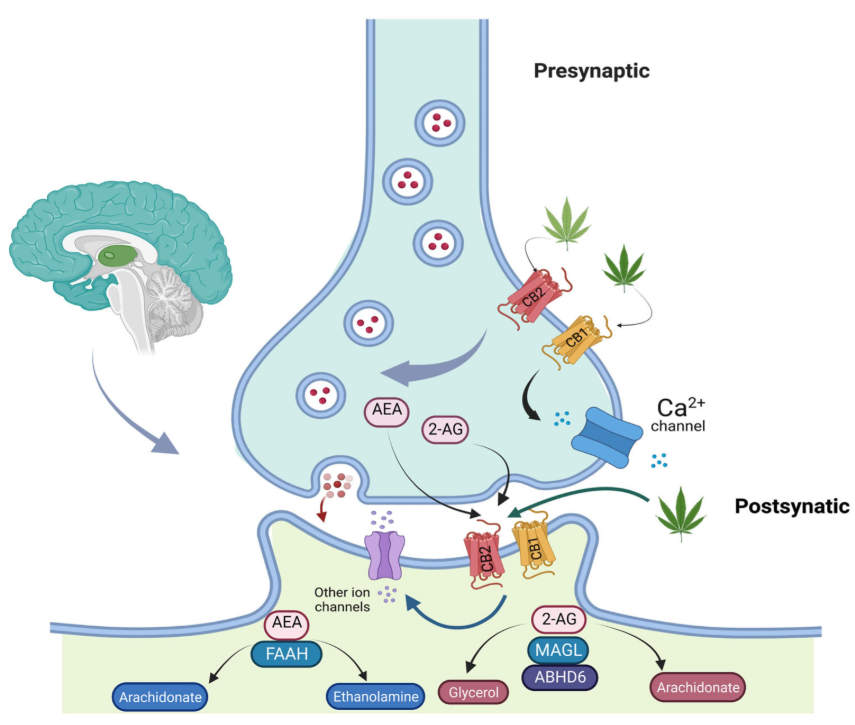
To understand synthetic cannabinoids, it helps to understand the endocannabinoid system.
The endocannabinoid system is a network of receptors, naturally occurring signaling molecules, and enzymes involved in regulating various functions throughout the body.
Two widely discussed cannabinoid receptors are CB1 and CB2.
CB1 receptors are abundant in the brain and central nervous system, where they influence processes such as memory, coordination, mood, and perception. CB2 receptors are found in immune-related tissues and other parts of the body.
THC, the primary intoxicating compound in cannabis, interacts with cannabinoid receptors, particularly CB1 receptors.
Synthetic cannabinoids can also activate these receptors. However, their effects are not necessarily equivalent to those of THC.
Many synthetic cannabinoids act as strong or full agonists at CB1 receptors, whereas THC acts as a partial agonist under typical pharmacological descriptions. This difference can help explain why certain synthetic compounds produce more intense or dangerous effects than cannabis.
The exact effects vary across the different chemicals in this broad category. Some may also interact with other biological targets, further complicating their effects.
Because many recreational synthetic cannabinoid products are poorly regulated, it can be difficult to determine which chemical a person has taken or how strongly it may affect them.
This uncertainty is one of the major reasons synthetic cannabinoids pose a significant public health concern.
Are Synthetic Cannabinoids the Same as Marijuana?
No. Synthetic cannabinoids and natural cannabis are different substances, even though both can affect cannabinoid receptors.
Cannabis is a plant that contains numerous chemical compounds, including THC and cannabidiol (CBD). Synthetic cannabinoids are laboratory-made chemicals that are designed to interact with cannabinoid receptors.
The distinction is important because products sold as synthetic marijuana may not contain cannabis at all.
The two categories also differ in their chemical composition, pharmacological activity, and potential risks.
Key differences between synthetic cannabinoids and cannabis
1. Chemical composition
Natural cannabis contains a mixture of plant-derived compounds. Synthetic cannabinoid products contain man-made chemicals, and the precise ingredients may be unknown.
2. Potency and receptor activity
Some synthetic cannabinoids activate cannabinoid receptors more strongly than THC. Their effects can be intense and unpredictable, although potency differs between individual compounds.
3. Product consistency
Cannabis products can also vary in potency and composition, but unregulated synthetic cannabinoid products may have especially unpredictable chemical mixtures and uneven concentrations.
4. Health effects
Both cannabis and synthetic cannabinoids can cause adverse effects. However, synthetic cannabinoids have been associated with severe reactions such as seizures, acute psychosis, dangerous cardiovascular complications, and kidney injury.
5. Medical regulation
Cannabis-derived medicines and synthetic cannabinoid-related medicines are not interchangeable with unregulated recreational products. A substance’s laboratory origin does not establish that it has been approved for medical use.
It is also important not to confuse unregulated synthetic cannabinoids with specific cannabinoid-based medicines that have undergone clinical research and regulatory review.
A medicine containing a defined compound and standardized dose is fundamentally different from an unregulated product with unknown ingredients.
Why Are Synthetic Cannabinoids Dangerous?
Synthetic cannabinoids can be dangerous because their effects are difficult to predict, their ingredients may be unknown, and some compounds have strong effects on the brain and other organs.
Several factors contribute to their risks.
Unpredictable Chemical Formulations
Manufacturers may change the ingredients used in synthetic cannabinoid products without changing the packaging or product name.
Consequently, consumers may not know which substance they are exposed to.
Different chemicals can produce different effects, and some may be associated with more severe toxicity than others.
Uncertain Concentrations
The concentration of synthetic cannabinoids may vary between products or within a single batch.
This means that exposure may be inconsistent, even when a person believes they are using a familiar product.
An apparently small amount of a highly potent chemical may produce serious effects.
Potential Contamination
Unregulated products may contain contaminants or unexpected substances.
These can introduce additional toxic effects, making it more difficult for healthcare professionals to determine the cause of an illness.
Strong Effects on the Brain
Certain synthetic cannabinoids can cause severe changes in perception, mood, consciousness, and behavior.
Possible effects include panic, extreme agitation, hallucinations, paranoia, confusion, and seizures.
In some cases, these neurological effects can develop alongside dangerous changes in heart rate, blood pressure, or body temperature.
Limited Predictability of Long-Term Effects
The long-term effects of many individual synthetic cannabinoids are not fully understood.
Research is complicated by the large number of compounds, changing product formulations, and the frequent presence of other substances.
The absence of complete long-term evidence should not be interpreted as evidence of safety.

What Are the Common Effects of Synthetic Cannabinoids?
Synthetic cannabinoids can affect multiple systems in the body. Some people experience temporary psychological changes, while others develop serious medical complications.
The effects depend on the specific chemical, amount of exposure, route of exposure, individual health factors, and whether other substances were taken.
Psychological and Behavioral Effects
Synthetic cannabinoids can alter a person’s thoughts, emotions, and behavior.
Possible effects include:
- Anxiety and panic.
- Intense fear or paranoia.
- Agitation and irritability.
- Confusion and disorientation.
- Hallucinations.
- Delusions.
- Unusual or unpredictable behavior.
- Severe psychological distress.
- Acute psychosis in some cases.
These symptoms can be frightening for the affected person and those around them.
Someone experiencing severe confusion or paranoia may have difficulty distinguishing their perceptions from reality. They may also struggle to communicate clearly or recognize that they need medical assistance.
If symptoms are severe or develop suddenly, professional assessment is important.
Physical Effects
Synthetic cannabinoids may cause a range of physical symptoms, including:
- Rapid heartbeat.
- Elevated blood pressure.
- Dizziness.
- Nausea and vomiting.
- Sweating.
- Tremors.
- Muscle discomfort.
- Chest pain.
- Difficulty breathing.
- Loss of coordination.
- Seizures in severe cases.
Not everyone experiences the same symptoms, and a person’s reaction can differ between exposures.
A person may also experience both psychological and physical symptoms simultaneously. For example, severe anxiety may occur alongside a racing heart, sweating, and confusion.
These effects should not automatically be dismissed as ordinary intoxication, particularly when they are severe, unusual, or rapidly worsening.
What Are the Signs of Synthetic Cannabinoid Poisoning?
Synthetic cannabinoid poisoning occurs when exposure produces harmful effects that require medical attention. It can develop unpredictably and may become life-threatening.
Recognizing the warning signs is important because serious complications may require immediate treatment.
1. Severe Confusion
A person may become disoriented, struggle to recognize their surroundings, or have difficulty answering simple questions.
Severe confusion can indicate significant effects on the brain and should be assessed urgently.
2. Hallucinations and Paranoia
The person may see, hear, or believe things that are not consistent with reality.
They may become intensely suspicious, frightened, or convinced that they are in danger.
If they become severely distressed or cannot remain safe, seek emergency medical help.
3. Rapid or Irregular Heartbeat
Synthetic cannabinoids may cause a fast heartbeat or other cardiovascular disturbances.
A racing heart accompanied by chest pain, fainting, shortness of breath, or severe weakness requires emergency evaluation.
4. Seizures
Seizures are a serious possible complication of synthetic cannabinoid poisoning.
During a seizure, the person may lose awareness, stiffen, or experience involuntary movements.
Protect them from nearby hazards, do not restrain their movements, and never put anything in their mouth. Call emergency services.
5. Difficulty Breathing
Breathing difficulties can indicate a life-threatening reaction, especially when accompanied by reduced consciousness.
Call emergency services immediately if the person struggles to breathe, becomes unresponsive, or develops abnormal breathing.
6. Severe Agitation
A person may become extremely restless, distressed, or difficult to communicate with.
Avoid confrontation and maintain a safe environment. If the agitation is severe, especially with confusion, overheating, or chest pain, seek emergency assistance.
7. Collapse or Unconsciousness
Collapse or unconsciousness may indicate severe poisoning or another medical emergency.
Call emergency services immediately, check breathing, and follow the dispatcher’s instructions.
Important: Do not wait for several symptoms to appear before seeking help. One severe symptom can be enough to justify emergency care.
Can Synthetic Cannabinoids Cause Psychosis?
Yes. Synthetic cannabinoids have been associated with acute psychotic symptoms in some individuals.
Psychosis is a condition in which a person may experience changes in perception or thinking, including hallucinations, delusions, and difficulty distinguishing reality from their own experiences.
Synthetic cannabinoid-related psychosis may occur alongside agitation, anxiety, confusion, or unusual behavior.
The onset and severity vary. Some symptoms may resolve as the immediate effects subside, while others can persist and require ongoing mental health assessment.
It is not always possible to predict who will experience these reactions. A person’s mental health history, the particular substance involved, and other individual factors may influence the outcome, but severe reactions can also occur unexpectedly.
If someone develops hallucinations, severe paranoia, or disorganized behavior after using a synthetic cannabinoid, they should receive medical assessment.
If the person expresses suicidal thoughts, threatens to harm someone, becomes unable to care for themselves, or presents an immediate safety risk, seek emergency assistance.
Synthetic cannabinoid-related psychosis should not be treated as a character flaw or simply dismissed as intoxication. It is a potentially serious health problem that deserves appropriate care.
Can Synthetic Cannabinoids Damage the Heart and Kidneys?
Yes. Synthetic cannabinoid exposure has been associated with serious cardiovascular and kidney complications.
Cardiovascular Effects
Some synthetic cannabinoids can increase heart rate and blood pressure or contribute to other cardiovascular disturbances.
Severe reactions have been associated with chest pain, abnormal heart rhythms, heart attacks, and strokes.
The exact risk varies according to the substance, exposure, other drugs involved, and individual health factors.
People experiencing chest pain, fainting, severe palpitations, or sudden neurological symptoms after suspected exposure need urgent medical assessment.
Kidney Injury
Acute kidney injury has been reported following synthetic cannabinoid use.
The kidneys help filter waste from the blood and regulate fluid and electrolyte balance. When kidney function deteriorates suddenly, waste products and fluid may accumulate, and electrolyte abnormalities can develop.
Symptoms of kidney injury are not always obvious at first. Some people may experience nausea, weakness, reduced urine output, swelling, or other signs, while laboratory testing may reveal abnormalities before clear symptoms develop.
The relationship between a particular synthetic cannabinoid product and kidney injury may be difficult to establish because formulations can vary and contaminants may be involved.
However, the documented association is a reason for concern and reinforces the importance of seeking medical care after a serious reaction.
What Are the Possible Long-Term Effects of Synthetic Cannabinoids?
The long-term effects of synthetic cannabinoids are not fully understood. Research is complicated by the diversity of compounds and the difficulty of knowing precisely what people have used.
Nevertheless, repeated use may be associated with several important health concerns.
Mental Health Problems
Repeated exposure may be associated with psychological difficulties, including anxiety, mood changes, and episodes of psychosis.
Some individuals may require ongoing mental health support after severe reactions.
It is not yet possible to make reliable predictions about the long-term outcome for every person because the compounds and circumstances vary widely.
Cognitive Difficulties
Some people report difficulties with concentration, memory, or attention following substance use.
The degree to which synthetic cannabinoids themselves cause lasting cognitive changes remains an area of ongoing research.
Repeated intoxication, disrupted sleep, other substance use, and underlying health conditions may also influence cognitive functioning.
Cardiovascular and Kidney Complications
Severe acute poisoning can cause organ injury that may have lasting consequences.
For example, significant kidney damage may require follow-up testing and ongoing medical care. Cardiovascular complications can also have serious effects on health.
Dependence and Withdrawal
Some people who use synthetic cannabinoids frequently report symptoms when they stop.
These symptoms may include anxiety, irritability, sweating, headaches, nausea, vomiting, and sleep difficulties.
More serious symptoms have also been reported among some frequent users, making medical assessment important when withdrawal is severe.
The risk and severity of withdrawal vary. People who have been using synthetic cannabinoids regularly and are struggling to stop may benefit from professional support.
Are Synthetic Cannabinoids Addictive?
Synthetic cannabinoids may lead to dependence in some people.
Dependence means that the body or brain has adapted to repeated exposure, and reducing or stopping use may cause withdrawal symptoms.
A person may also develop a pattern of use that becomes difficult to control despite negative consequences.
Possible warning signs of a problematic pattern include:
- Repeatedly trying to stop but returning to use.
- Spending substantial time obtaining or recovering from the substance.
- Continuing to use despite physical or psychological harm.
- Experiencing cravings.
- Neglecting responsibilities or relationships.
- Continuing to use despite difficulties at work, school, or home.
- Experiencing withdrawal symptoms after reducing or stopping use.
These signs do not establish a diagnosis on their own, but they may indicate that professional support would be helpful.
Substance use disorders are health conditions, not evidence of weak character. People experiencing dependence deserve respectful treatment and practical support.
A healthcare professional can assess symptoms, identify additional health concerns, and recommend an appropriate treatment plan.
What Happens When Someone Stops Using Synthetic Cannabinoids?
People who have used synthetic cannabinoids frequently may experience withdrawal symptoms when they reduce or stop use.
Reported symptoms include anxiety, irritability, sweating, headaches, nausea, vomiting, and difficulty sleeping.
Some people may experience more serious symptoms, including rapid heartbeat, chest pain, breathing difficulties, or seizures.
The severity of withdrawal can vary according to the pattern of use, the substances involved, other health conditions, and possible co-use of other drugs.
Because products may contain unknown chemicals, withdrawal symptoms can be difficult to predict.
Anyone experiencing severe symptoms should seek medical attention. Seizures, chest pain, breathing problems, and severe confusion require emergency evaluation.
People who are worried about dependence can consult a healthcare professional or addiction treatment service for help developing an appropriate plan.
Support may include medical assessment, treatment for withdrawal symptoms, mental health care, counseling, and ongoing recovery support.
How Are Synthetic Cannabinoid Poisoning and Related Conditions Diagnosed?
Diagnosing synthetic cannabinoid poisoning can be challenging because the products contain many possible chemicals and routine drug tests may not detect all of them.
Healthcare professionals usually assess the person’s symptoms, medical history, exposure information, and physical condition.
Medical History
Clinicians may ask about the suspected substance, when exposure occurred, the symptoms that developed, and whether alcohol, prescription medication, or other drugs may have been involved.
Providing honest information helps healthcare professionals choose appropriate tests and treatment.
The priority is treating the medical problem, not judging the person.
Physical Examination
Medical staff may assess consciousness, breathing, heart rate, blood pressure, body temperature, and oxygen levels.
They may also examine neurological function and look for signs of cardiovascular complications or dehydration.
Laboratory Testing
Blood and urine tests may be used to investigate complications or exclude other causes of symptoms.
Depending on the situation, clinicians may assess kidney function, electrolyte levels, muscle injury, or other abnormalities.
Routine drug screening may not identify the particular synthetic cannabinoid involved. A negative result does not necessarily rule out exposure.
Heart and Neurological Monitoring
An electrocardiogram may be used to assess heart rhythm, particularly when the person has chest pain, palpitations, or other concerning symptoms.
Additional testing may be necessary when clinicians suspect seizures, stroke, or other complications.
The diagnostic approach depends on the person’s condition rather than one universal test.
How Is Synthetic Cannabinoid Poisoning Treated?
There is no single treatment that reverses every synthetic cannabinoid. Care focuses on stabilizing the person, treating symptoms, and managing complications.
Emergency Stabilization
People with severe poisoning may need support for breathing and circulation.
Healthcare professionals may provide oxygen, airway support, intravenous fluids, and continuous monitoring when indicated.
The exact measures depend on the person’s condition.

Treatment for Seizures
Seizures require prompt medical attention. Healthcare professionals may administer medication to control them and investigate possible causes.
Repeated or prolonged seizures can cause additional complications and require urgent treatment.
Management of Severe Agitation
Severe agitation, confusion, or psychosis may require a carefully supervised medical environment.
Clinicians may use medication when appropriate to control dangerous symptoms and protect the person and others.
Treatment decisions depend on the suspected cause, the person’s condition, and other medical risks.
Management of Cardiovascular Problems
People with chest pain, abnormal heart rhythms, or unstable blood pressure may require cardiac monitoring and targeted treatment.
Serious cardiovascular symptoms should never be managed solely with home remedies.
Treatment of Kidney Injury and Other Complications
If kidney injury or another organ complication develops, clinicians may provide supportive treatment and specialist care.
Severe cases may require hospital admission or intensive care.
Mental Health and Addiction Support
Once the immediate medical emergency has been addressed, some people may benefit from mental health assessment, addiction treatment, or both.
Support can help address anxiety, psychosis, dependence, and other concerns associated with substance use.
The appropriate approach depends on the person’s needs and circumstances.
What Should You Do if Someone Has Used Synthetic Cannabinoids and Becomes Unwell?
A calm and prompt response is important when someone becomes ill after suspected synthetic cannabinoid use.
1. Check for immediate danger.
Make sure the surroundings are safe. Avoid touching unknown substances or entering an area where exposure may put you at risk.
2. Call emergency services for severe symptoms.
Seizures, collapse, chest pain, severe breathing difficulties, and unconsciousness require immediate medical assistance.
3. Monitor responsiveness and breathing.
If the person becomes unresponsive, check whether they are breathing normally and follow the emergency dispatcher’s instructions. Provide CPR if indicated and if you are able to do so safely.
4. Protect the person from injury.
If they are confused or agitated, reduce stimulation and avoid confrontation. Do not restrain them unless necessary to prevent immediate harm and you can do so safely.
5. Do not give unprescribed medicines or home remedies.
Do not try to counteract the effects with alcohol, another drug, or an unverified remedy. Do not induce vomiting.
6. Share useful information with healthcare professionals.
Explain what is known about the exposure, when it may have occurred, and what symptoms developed. If packaging is available, provide it to medical personnel when safe.
7. Seek medical guidance even if symptoms improve.
Some complications may not be immediately obvious, and a temporary improvement does not always mean the danger has passed.
How Can Synthetic Cannabinoid Use Be Prevented?
Prevention requires accurate information, supportive relationships, access to healthcare, and awareness of the risks associated with unregulated substances.
Increase Awareness
People should understand that synthetic cannabinoids are not the same as natural cannabis and are not necessarily safer because they are laboratory-made or marketed as herbal products.
Clear health education can correct misconceptions about potency, product contents, and potential complications.
Avoid Unknown and Unregulated Products
Products with unclear ingredients or misleading labels can pose substantial risks.
Avoid assuming that a product is safe because it is sold openly, has attractive packaging, or claims to be natural.
Store Medicines and Chemicals Safely
Keep medicines and other potentially harmful substances away from children and people who may accidentally ingest them.
Use appropriate packaging and follow storage instructions.
Encourage Open Conversations
Families, schools, and communities can help prevent harm by discussing substance-related risks without shaming people who have questions or who are already using drugs.
A supportive approach may make it easier for someone to disclose a problem and seek help.
Provide Access to Treatment
People experiencing dependence or repeated harmful reactions need access to healthcare and appropriate substance use treatment.
Education alone may not be enough for someone who is struggling with addiction. Counseling, medical care, and continuing support may be important parts of recovery.
Recognize Warning Signs Early
Knowing the symptoms of poisoning can help people respond promptly.
Public health education should emphasize that severe confusion, seizures, chest pain, difficulty breathing, and unconsciousness require urgent medical attention.
Are Synthetic Cannabinoids Legal?
The legal status of synthetic cannabinoids varies by country and jurisdiction.
Many governments have restricted specific synthetic cannabinoid compounds or broader groups of related substances. However, regulations differ, and new compounds may emerge that are not explicitly named in older laws.
A product’s availability in a shop or online does not necessarily mean that it is legal or safe.
Similarly, a label stating that a product is intended for incense or another non-consumable purpose does not establish that it is harmless.
Anyone seeking information about legal status should consult current official legislation or government guidance for their location.
It is also important to distinguish legal status from medical safety. A substance may be restricted because of its health risks, but legality alone is not a reliable measure of toxicity.
This article is educational and should not be interpreted as legal advice.
Frequently Asked Questions About Synthetic Cannabinoids
1. What are synthetic cannabinoids in simple terms?
Synthetic cannabinoids are laboratory-made chemicals that interact with cannabinoid receptors in the body. Some are used in unregulated recreational products marketed as K2, Spice, or synthetic marijuana. Their effects can be unpredictable, and some can cause serious or life-threatening health complications.
2. Are synthetic cannabinoids more dangerous than natural cannabis?
Some synthetic cannabinoids can produce more severe and unpredictable effects than THC-containing cannabis because they may activate cannabinoid receptors more strongly and because their ingredients and concentrations are often uncertain. The level of risk varies by compound and exposure, but unregulated synthetic cannabinoid products should not be considered safe alternatives to cannabis.
3. What are the most common side effects of synthetic cannabinoids?
Possible side effects include anxiety, agitation, confusion, dizziness, nausea, vomiting, rapid heartbeat, and paranoia. More serious reactions can include hallucinations, psychosis, seizures, chest pain, kidney injury, and cardiovascular complications.
4. Can synthetic cannabinoids cause an overdose?
Yes. Synthetic cannabinoids can cause severe poisoning, sometimes requiring emergency treatment or hospital admission. Warning signs include seizures, collapse, severe confusion, chest pain, difficulty breathing, and unconsciousness.
5. Are K2 and Spice the same thing?
K2 and Spice are informal names associated with synthetic cannabinoid products. They do not refer to one standardized chemical, and products sold under these names may contain different substances and concentrations.
6. Can synthetic cannabinoids cause addiction?
Yes. Some people develop dependence or a pattern of use that becomes difficult to control. Withdrawal symptoms may occur after frequent use, and professional support can help people address dependence and related health concerns.
7. Can synthetic cannabinoids cause mental health problems?
Synthetic cannabinoids have been associated with anxiety, paranoia, hallucinations, severe agitation, and psychosis. The severity and duration of these effects vary, and some individuals may need ongoing mental health assessment after a serious reaction.
8. Can synthetic cannabinoids damage the kidneys?
Yes. Acute kidney injury has been reported following synthetic cannabinoid exposure. The causes may vary, and unknown ingredients or contaminants may contribute in some cases. Anyone who becomes seriously unwell after exposure should receive medical assessment.
9. Is there an antidote for synthetic cannabinoids?
There is no single specific antidote that reverses all synthetic cannabinoids. Treatment generally involves supportive medical care and management of complications, such as seizures, agitation, breathing problems, or cardiovascular disturbances.
10. What should I do if someone has a bad reaction to synthetic cannabinoids?
Call emergency services immediately if the person has a seizure, collapses, develops chest pain or severe breathing difficulties, or becomes unconscious. Keep them safe, monitor their breathing, and follow the emergency dispatcher’s instructions. Do not administer unverified home remedies.
11. Can synthetic cannabinoid effects last for a long time?
The duration varies according to the substance, amount of exposure, route of exposure, and individual health factors. Some effects may resolve relatively quickly, while severe psychological or physical complications can persist and require treatment. It is not possible to predict the duration reliably for every product.
12. Are synthetic cannabinoids used in medicine?
Some specific cannabinoid-related compounds have been studied or developed for medical purposes. However, this does not mean that unregulated recreational synthetic cannabinoid products are medicines or that they are safe. Products with unknown ingredients and concentrations are fundamentally different from regulated treatments.
Conclusion: Understanding What Synthetic Cannabinoids Are and Why They Matter
Synthetic cannabinoids are laboratory-made chemicals that interact with cannabinoid receptors in the brain and body. Although they are sometimes marketed as synthetic marijuana, herbal cannabis alternatives, K2, or Spice, they are not equivalent to natural cannabis.
Their unpredictable chemical composition and potentially strong effects can make them dangerous. Health complications may include severe anxiety, paranoia, hallucinations, seizures, cardiovascular problems, kidney injury, and life-threatening poisoning.
The long-term effects of many individual synthetic cannabinoids remain incompletely understood, and the risks can vary considerably between compounds and products.
Recognizing the symptoms of synthetic cannabinoid poisoning is essential. Severe confusion, seizures, chest pain, breathing difficulties, and unconsciousness require immediate medical attention.
Prevention depends on accurate education, awareness of unregulated products, access to healthcare, and compassionate support for people experiencing substance-related difficulties.
Ultimately, understanding what synthetic cannabinoids are helps individuals make informed decisions, recognize misleading product claims, and respond appropriately when a serious reaction occurs.
If you suspect synthetic cannabinoid poisoning, seek medical guidance promptly. In a medical emergency, call your local emergency services rather than waiting for symptoms to improve.